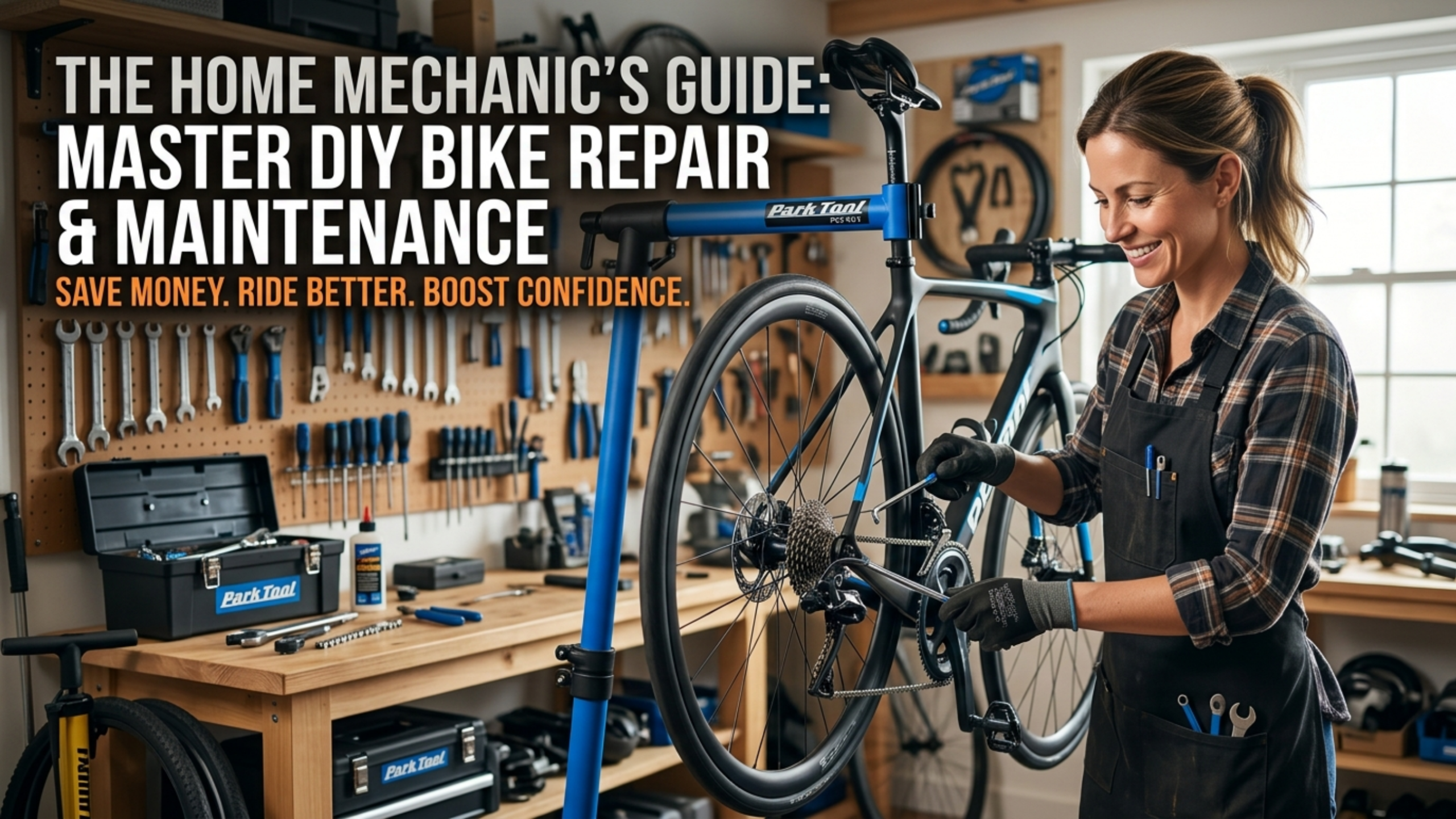
Take control of your bike’s performance with expert DIY repair and maintenance skills.
Every cyclist knows the feeling: you’re miles from home, and something goes wrong. A flat tire, a skipping chain, or brakes that suddenly feel mushy. You could call for a ride, push your bike back, or spend a fortune at a shop. But what if you could fix it yourself? What if you had the knowledge and confidence to handle almost any bike problem right on the spot?
That’s where becoming a home mechanic changes everything. Learning to repair and maintain your own bicycle isn’t just about saving money—though you’ll save hundreds, even thousands, over time. It’s about freedom, self-reliance, and the deep satisfaction of keeping your machine in peak condition. Whether you’re a weekend warrior, a daily commuter, or a mountain bike enthusiast, mastering DIY bike repair transforms your riding experience.
In this comprehensive guide, we’ll cover the essential tools, step-by-step repairs, and pro tips you need to become your own bike mechanic. And if you want to accelerate your learning with detailed video tutorials and expert guidance, you can enroll in the complete DIY Bike Repair Course here.
Why Become Your Own Bike Mechanic? The Case for DIY Repair
The average bicycle tune-up at a shop costs $60–$150. A flat tire repair runs $15–$30. Brake adjustments, gear tuning, and other small jobs add up quickly. Over a few years, you could spend more on maintenance than you paid for the bike itself.
But the benefits of DIY repair go beyond money:
- Convenience: No waiting for shop appointments or dropping off your bike for days.
- Confidence on the road: Knowing you can fix a flat or adjust a cable gives you peace of mind on long rides.
- Deeper understanding of your bike: When you know how every component works, you ride more efficiently and can spot problems early.
- Customization: You can upgrade parts and fine-tune your bike exactly to your preferences.
“Learning to maintain my own bike has saved me over $500 in the last year alone. Plus, I never have to wait a week for a simple tune-up.” — Satisfied DIY mechanic
Building Your Home Workshop: Essential Tools for Bike Repair
You don’t need a professional shop to maintain your bike. With a modest investment in quality tools, you can handle 95% of common repairs. Here’s what to start with:
Must-Have Tools (Under $100 Total)
- Tire levers (2–3) – for removing tires
- Patch kit and spare inner tubes
- Floor pump with pressure gauge
- Multi-tool with hex wrenches (2.5–8mm) and screwdrivers
- Chain breaker tool
- Chain wear indicator
- Cable cutters
- Degreaser and chain lubricant
- Set of metric wrenches (8–15mm)
- Pedal wrench (15mm)
Nice-to-Have Upgrades
- Bike repair stand (saves your back)
- Torque wrench (for carbon frames and critical bolts)
- Bottom bracket and cassette removal tools
- Spoke wrench (for wheel truing)
The DIY Bike Repair Course includes a detailed tool buying guide, so you invest only in what you truly need.
With a few basic tools, you can handle most bike repairs at home.
Master the Most Common Bike Repairs: Step-by-Step
Let’s dive into the repairs you’ll use most often. Follow these steps, and you’ll be on your way to home mechanic mastery.
1. Fixing a Flat Tire (Puncture Repair)
The most common roadside emergency. Here’s how to do it in 10 minutes:
- Remove the wheel from the bike.
- Use tire levers to pry the tire bead off the rim.
- Remove the inner tube.
- Locate the puncture (listen for hissing or submerge in water to see bubbles).
- Rough the area around the puncture with sandpaper, apply glue, then patch.
- Check inside the tire for debris that caused the puncture.
- Reinstall the tube, seat the tire bead, and inflate.
2. Adjusting Brakes (Rim or Disc)
Poor braking is dangerous. For rim brakes:
- Center the brake caliper over the rim.
- Adjust the barrel adjuster to take up cable slack.
- Set the pad distance (1–2mm from rim).
For disc brakes:
- Loosen caliper mounting bolts, squeeze brake lever, then tighten bolts (centering method).
- Adjust pad contact via the inner pad adjuster.
3. Tuning Gears (Derailleur Adjustment)
Skipping gears or slow shifting? Adjust your rear derailleur:
- Shift to the smallest cog (highest gear).
- Adjust the high-limit screw (marked “H”) so the derailleur is aligned under the cog.
- Use the barrel adjuster to fine-tune cable tension so shifting is crisp up and down the cassette.
- Set the low-limit screw (“L”) to prevent the chain from falling into the spokes.
4. Chain Maintenance and Replacement
A worn chain damages gears. Check wear with a chain checker tool. If elongated, replace:
- Use a chain breaker to push out a pin and remove the old chain.
- Thread the new chain through the derailleurs correctly (note the routing diagram).
- Shorten the chain to the same length as the old one.
- Join the chain with a quick-link or push a pin back in.
5. Cleaning and Lubricating Your Drivetrain
Regular cleaning extends component life dramatically. Degrease chain, cassette, and chainrings. Rinse, dry, then apply lubricant to each chain link, wiping off excess.
Level Up: Advanced Repairs for the Ambitious Home Mechanic
Once you’re comfortable with basic maintenance, you can tackle more involved jobs that save even more money:
- Wheel truing: Correcting lateral and radial wobbles using a spoke wrench.
- Bottom bracket replacement: Removing and installing cartridge or external bottom brackets.
- Headset adjustment and replacement: Fixing loose or indexed steering.
- Hydraulic brake bleed: Restoring lever feel and power on disc brakes.
- Suspension service: Changing oil and seals on mountain bike forks and shocks.
These repairs require specialized tools and detailed knowledge. The DIY Bike Repair Course covers them with high-definition video tutorials, making complex jobs manageable.
Create a Maintenance Schedule: Keep Your Bike Running Like New
Prevention is easier than repair. Follow this schedule:
Before Every Ride (Quick Check)
- Tire pressure
- Brake function (squeeze levers)
- Quick-release skewers tight
- Chain lubrication (listen for noise)
Weekly (100–200 miles)
- Clean and lube chain
- Check for loose bolts
- Inspect tires for cuts or wear
Monthly (300–500 miles)
- Check chain wear
- Inspect brake pads and cables
- Check wheel trueness and spoke tension
Seasonally (Every 1,000–2,000 miles)
- Deep clean drivetrain
- Replace cables and housing if frayed
- Service bearings (hubs, bottom bracket, headset)
Common DIY Bike Repair Mistakes (And How to Avoid Them)
- Over-tightening bolts: Use a torque wrench for carbon parts; otherwise tighten snugly plus a quarter-turn. Stripped threads are costly.
- Ignoring chain wear: A worn chain destroys cassette and chainrings. Replace early.
- Using the wrong lubricant: Wet lube for rainy conditions, dry lube for dusty. Never use WD-40 as chain lube.
- Misrouting cables: Always follow the original path. Take photos before disassembly.
- Skipping the test ride: Always test brakes and gears in a safe area before heading out on the road.
Why Learn from a Structured Course? The DIY Bike Repair Course Advantage
You can find free tutorials on YouTube, but they often lack depth, organization, and quality control. The DIY Bike Repair Course offers:
- Step-by-step video lessons filmed from multiple angles with clear narration.
- Downloadable checklists and torque specs for your reference wall.
- Troubleshooting guides for when things don’t go as planned.
- Lifetime access to all updates and new content.
- Money-back guarantee – try it risk-free.
The course covers everything from basic flat fixes to full overhauls. It’s designed for home mechanics of all skill levels. Whether you’re a complete novice or a seasoned tinkerer, you’ll find valuable tips and techniques to save time and money.
DIY Bike Repair: Pros and Cons
Pros ✅
- Save hundreds of dollars annually on shop labor
- Convenience – fix problems immediately, no appointments
- Self-reliance on long rides or tours
- Deeper understanding of your bike improves riding efficiency
- Rewarding sense of accomplishment
Cons ❌
- Initial tool investment (though quickly recouped)
- Learning curve for complex repairs
- Risk of making mistakes – mitigated by proper training
Frequently Asked Questions About DIY Bike Repair
Q: How much money can I save by doing my own repairs?
A: Most home mechanics save $200–$600 per year. Over five years, that’s thousands of dollars.
Q: Do I need a dedicated workspace?
A: A garage, basement, or even a spare room corner works. A repair stand is helpful but not required.
Q: Can I learn everything from free YouTube videos?
A: You can learn basics, but quality varies. A structured course saves time and ensures you learn correct techniques without bad habits.
Q: Is the DIY Bike Repair Course suitable for mountain bikes and road bikes?
A: Yes, the course covers both, including specific topics like suspension forks and disc brakes for MTB.
Final Verdict: Is Becoming a Home Mechanic Worth It?
Absolutely. The combination of financial savings, convenience, and personal satisfaction makes learning DIY bike repair one of the best investments a cyclist can make. You’ll never be stranded by a simple mechanical issue again, and you’ll enjoy a deeper connection with your bike.
The DIY Bike Repair Course provides the fastest, most reliable path to mastery. With clear video instruction, downloadable resources, and expert support, you’ll be confidently repairing your bike in no time. Plus, the 60-day money-back guarantee means you can try it risk-free.
Rating: 9.4/10 — Highly recommended for any cyclist who wants to save money, gain independence, and keep their bike in top condition.
Get instant access to step-by-step video lessons and start fixing your bike today.
Ready to become your own bike mechanic?
Stop paying high shop fees and waiting days for simple repairs. Join thousands of cyclists who have mastered bike maintenance with the DIY Bike Repair Course. Get lifetime access to over 50 video lessons, downloadable guides, and expert support.
🚲 GET STARTED WITH THE DIY BIKE REPAIR COURSE 🚲
60-day money-back guarantee • Instant access • Suitable for all skill levels