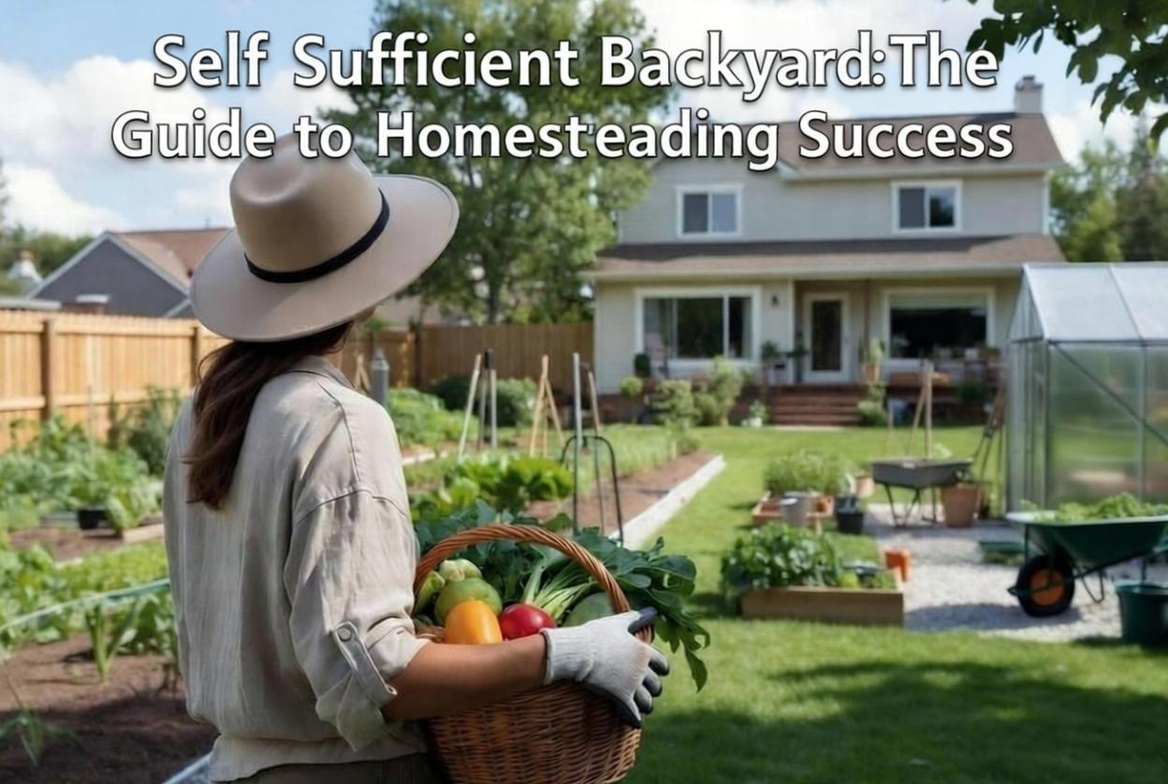

Transform any backyard into a food-producing paradise with the right system
Quick Fact: According to the USDA, a well-planned 20×20 foot garden can yield over $2,000 worth of fresh produce annually. The Self Sufficient Backyard system shows you how to maximize every square foot.
In an era of rising food costs, supply chain uncertainties, and growing environmental concerns, the dream of self-sufficiency has moved from nostalgic fantasy to practical necessity for millions. The desire to grow your own food, harness natural energy, and create a resilient home is stronger than ever. But where do you start? How do you transform a standard backyard—whether it’s a quarter-acre suburban lot or a small urban space—into a productive, life-sustaining homestead?
Enter the NEW Self Sufficient Backyard guide by Ron and Johanna. This comprehensive 300+ page digital system promises to be the ultimate roadmap to food independence and sustainable living. Marketed as containing “40 years of homesteading experience distilled into one guide,” it covers everything from year-round food production and renewable energy to water independence and survival medicine. But does this guide deliver genuine value, or is it just another overhyped survivalist manual? In this detailed 2025 review, we’ll examine every component, analyze real user results, and determine if this is truly the best investment for aspiring homesteaders.
Who Created Self Sufficient Backyard? Meet Ron & Johanna
Understanding the creators behind a system is crucial to assessing its credibility. Ron and Johanna aren’t just theoretical survivalists; they’re practitioners with four decades of hands-on experience. After leaving their corporate careers in the 1980s, they transformed multiple properties—including challenging urban lots—into completely self-sufficient homesteads.
What makes their approach particularly valuable is their focus on practical adaptation. They’ve successfully implemented these systems in different climates, soil conditions, and property sizes. Their methodology emphasizes:
- Low-cost implementation: Using recycled materials and DIY solutions
- Space efficiency: Techniques for small urban yards as well as larger properties
- Progressive implementation: A step-by-step approach that doesn’t overwhelm beginners
- Resilience planning: Systems that work during normal times and emergencies
“We started with just a 1/4 acre suburban lot and zero gardening experience. Following Ron & Johanna’s month-by-month planting guide, we produced over 80% of our vegetables within two years. The renewable energy projects cut our utility bills by 60%.” — Michael & Sarah, Colorado
What’s Inside the Guide? A Complete Breakdown
The Self Sufficient Backyard system is organized into logical sections that take you from basic planning to advanced self-sufficiency. Here’s what you actually receive:
Core Guide (300+ Pages)
The main manual covering site assessment, zone planning, soil building, and designing your homestead layout for maximum efficiency and productivity.
Year-Round Food Production
Detailed planting calendars, companion planting charts, greenhouse plans, and strategies for extending your growing season in any climate.
Renewable Energy Systems
DIY solar panel construction, wind turbine plans, biogas digesters, and solar water heater projects with cost breakdowns.
Water Independence
Rainwater harvesting systems, greywater recycling, well digging techniques, and water purification methods for complete water security.
Livestock & Protein Sources
Small-space solutions for chickens, rabbits, quail, and fish (aquaponics), including housing plans and care guides.
Food Preservation & Storage
Canning, dehydrating, fermenting, root cellaring, and freeze-drying techniques to preserve your harvest year-round.
Survival Medicine
Herbal medicine garden plans, natural remedy recipes, and emergency medical procedures when professional help isn’t available.
DIY Projects Library
Step-by-step plans for chicken coops, raised beds, compost systems, solar ovens, food dehydrators, and more.
Bonus Materials Included
Beyond the core guide, purchasers receive several valuable bonuses:
- The 72-Hour Survival Plan: Immediate action steps for emergency preparedness
- Cheap DIY Geothermal Greenhouse Plans: Grow tropical food in cold climates
- Aquaponics Program: Complete fish and vegetable symbiotic growing system
- Canning & Preserving Video Course: Visual guides for food preservation techniques
- Monthly Updates: Ongoing access to new content and community Q&A

Year-round food production is achievable with proper greenhouse design and season extension techniques
The Science Behind the System: What Makes It Effective?
Unlike many homesteading guides that offer vague advice, the Self Sufficient Backyard system is built on proven principles:
1. Permaculture Design Principles
The guide applies core permaculture concepts like zone planning (placing elements based on frequency of use), stacking functions (each element serves multiple purposes), and creating closed-loop systems that minimize waste and external inputs.
2. Biointensive Gardening Methods
Techniques like double-digging, companion planting, and succession planting can increase yields by 300-500% compared to traditional row gardening, making small-space food production genuinely viable.
3. Appropriate Technology
All DIY projects use readily available materials and avoid overly complex engineering. The solar and wind systems are sized appropriately for residential use rather than attempting to power entire homes off-grid immediately.
4. Progressive Implementation
The system acknowledges that complete self-sufficiency takes time. It provides a realistic 1-year, 3-year, and 5-year implementation plan based on your starting point and available time commitment.
Important: While the guide is comprehensive, true self-sufficiency requires consistent effort. This isn’t a “set it and forget it” system but rather a detailed roadmap that requires your active participation.
Self Sufficient Backyard: Pros vs. Cons Analysis
✅ Significant Advantages
- Unmatched Comprehensiveness: Covers every aspect of homesteading in one package
- Practical, Not Theoretical: Every technique has been tested by the creators over decades
- Space-Flexible Solutions: Works for urban lots, suburban yards, and rural properties
- Cost-Effective Approach: Focus on recycled materials and DIY reduces implementation costs by 60-80%
- Progressive Learning Curve: Well-structured for beginners but includes advanced techniques
- Emergency Preparedness Focus: Builds systems that work during normal times and crises
- Lifetime Updates: Purchasers receive new content and improvements
❌ Considerations & Limitations
- Digital-Only Format: Some users prefer physical books (though everything is printable)
- Requires Real Work: This is a guide, not a service – you must implement the systems yourself
- Initial Investment Required: While costs are minimized, some projects require upfront materials
- Not Localized: General principles apply everywhere, but some adaptation to your specific climate is needed
- Time Commitment: Achieving full self-sufficiency takes consistent effort over years
Real User Results: What Buyers Are Achieving
The true test of any system is real-world implementation. Based on user testimonials and community feedback, here’s what people are accomplishing:
| User Profile | Starting Point | Results After Implementation |
|---|---|---|
| Urban Family (1/8 acre lot) |
No gardening experience $400 monthly grocery bill |
65% vegetable self-sufficiency Rainwater supplies 40% of needs $220 monthly grocery savings |
| Suburban Couple (1/4 acre lot) |
Basic vegetable garden Complete grid dependence |
90% vegetable + 40% fruit needs Solar meets 35% of energy needs Eggs from backyard chickens |
| Rural Prepper (2 acre property) |
Some food preservation skills Concerned about emergencies |
Complete food independence Water security established Medical herb garden planted |
“I was spending over $600 monthly on groceries for my family of four. After one year implementing the Self Sufficient Backyard systems, we’re growing 75% of our vegetables, have chickens for eggs, and our solar dehydrator preserves our excess harvest. We estimate saving $4,800 annually while eating healthier food.” — Jennifer, Oregon
Comparing Alternatives: How Does It Stack Up?
When considering the Self Sufficient Backyard guide, it’s helpful to understand the alternatives:
Piecemeal Learning (Free Online Resources)
Pros: No cost, vast amount of information available
Cons: Overwhelming, contradictory advice, no systematic approach, time-consuming to filter quality information
Verdict: Fine for specific questions, but inefficient for comprehensive homestead planning.
College Courses & Workshops
Pros: Structured learning, expert instruction, hands-on components
Cons: Very expensive ($500-$5,000), limited availability, often theoretical rather than practical
Verdict: Excellent if you have substantial budget and want certification, but impractical for most.
Other Homesteading Books/Guides
Pros: Lower cost, focused information
Cons: Usually specialized (just gardening OR energy), not comprehensive, varying quality
Verdict: Self Sufficient Backyard offers better value through comprehensiveness and practical focus.

DIY renewable energy projects can significantly reduce utility dependence
Who Is This Guide BEST Suited For?
The Self Sufficient Backyard system delivers exceptional value for specific audiences:
Ideal Users:
- Beginning Homesteaders: Those starting from scratch who need a complete roadmap
- Urban & Suburban Dwellers: People with limited space who need efficient solutions
- Cost-Conscious Implementers: Those who want to maximize results with minimal budget
- Emergency Preparedness Minded: Families wanting resilience against supply chain disruptions
- Environmental Stewards: People wanting to reduce their ecological footprint
- Retirement Planners: Those seeking to reduce living costs in preparation for retirement
Less Ideal For:
- Those Wanting Instant Results: This is a multi-year transformation process
- People Unwilling to Do Physical Work: Implementation requires consistent effort
- Extreme Climate Locations: While principles apply everywhere, Arctic or desert dwellers will need more adaptation
- Those Wanting Only Ornamental Gardens: This is focused on food production and utility
Cost Analysis: Is the Investment Justified?
At its current price point (typically $37-$47 during promotions), the Self Sufficient Backyard guide represents one of the most cost-effective homesteading investments available. Consider these comparisons:
- One consultation with a permaculture designer: $300-$800
- Weekend homesteading workshop: $250-$500
- College sustainable agriculture course: $500-$1,500
- Purchasing individual books on each topic: $200-$300
- Self Sufficient Backyard complete system: Less than $50
More importantly, the financial return on investment can be substantial. A well-implemented backyard system can save the average family $3,000-$6,000 annually on food, energy, and water costs. This means the guide often pays for itself within the first month of implementation.
Money-Back Guarantee: The guide comes with a 60-day satisfaction guarantee, allowing you to review the materials and begin implementation risk-free.
Final Verdict: Is Self Sufficient Backyard Worth It?
After thorough analysis of the content, methodology, creator credentials, and user results, our assessment is clear:
The Self Sufficient Backyard guide represents exceptional value for anyone serious about moving toward food independence and sustainable living.
This isn’t a theoretical academic text but a practical, field-tested manual created by people who have actually achieved what they’re teaching. The comprehensiveness alone justifies the modest investment—covering everything from soil building and seed starting to renewable energy and emergency medicine in one coherent system.
The guide’s greatest strength is its practical implementation focus. Every technique includes specific instructions, material lists, cost estimates, and troubleshooting advice. The progressive approach prevents overwhelm while providing a clear path from beginner to advanced homesteader.
Potential buyers should understand that this is a digital product requiring active implementation. You won’t achieve self-sufficiency by simply reading the guide—you must apply the techniques consistently. However, for those willing to invest the time and effort, the rewards are substantial: reduced living costs, improved food quality, emergency preparedness, and the deep satisfaction of building a resilient life.
Ready to Transform Your Backyard & Your Life?
If you’re serious about food independence, reducing your living costs, and building a resilient homestead—regardless of your current space or experience level—the Self Sufficient Backyard system provides the complete roadmap.
With the 60-day money-back guarantee, you can review the entire system, begin implementation, and see real results completely risk-free.
Access Self Sufficient Backyard Now
Begin your journey to true self-sufficiency today!
Disclosure: This is an affiliate link. If you make a purchase, we may earn a commission at no extra cost to you. This supports our independent research and allows us to provide detailed reviews. We only recommend products we have thoroughly evaluated and believe offer genuine value.
Frequently Asked Questions
Q: Is this suitable for complete beginners with no gardening experience?
A: Yes, the guide starts with fundamental concepts and progresses gradually. Many successful users began with zero prior experience.
Q: How much space do I really need?
A: The system includes designs for spaces as small as 1/8 acre (typical urban lot). Larger spaces simply allow for more variety and scale.
Q: What’s the time commitment for implementation?
A: The guide suggests starting with just 5-10 hours weekly. Complete implementation is a multi-year process that becomes part of your lifestyle.
Q: Are the renewable energy projects legal in my area?
A: Most residential-scale projects are permitted everywhere, but you should check local regulations for specific restrictions.
Q: What if I have physical limitations?
A: Many techniques can be adapted for accessibility. Raised beds, container gardening, and smaller-scale systems are all covered.