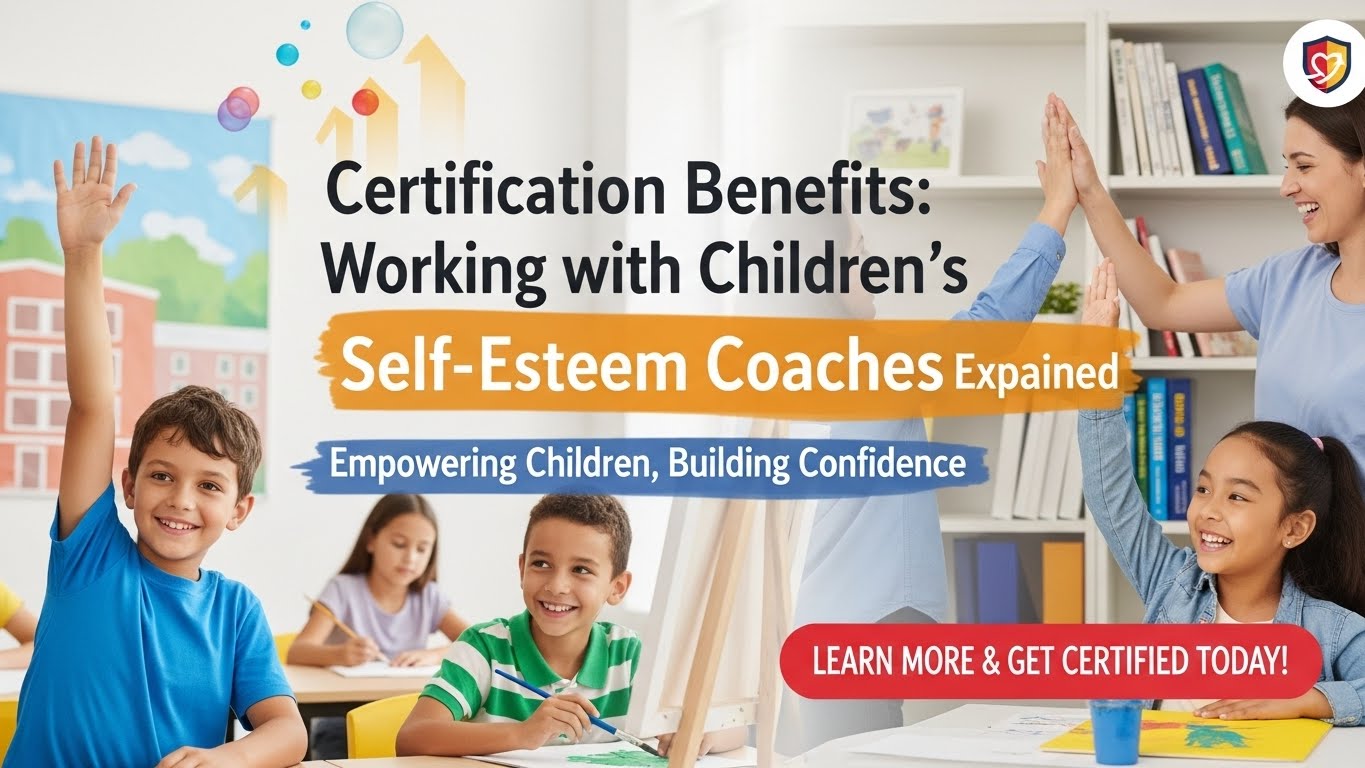
Unlocking Potential: The Transformative Benefits of Becoming a Certified Children’s Self-Esteem Coach
In a world where childhood anxiety and digital pressures are rising, certified coaches specializing in children’s self-esteem are creating profound change. Discover how formal certification transforms your ability to build resilient, confident young minds.
What separates a well-meaning adult from a transformative agent in a child’s life? Deliberate methodology, evidence-based techniques, and certified expertise. This comprehensive guide explores the multifaceted benefits of obtaining formal certification in children’s self-esteem coaching—not just as a credential, but as a paradigm shift in how you approach developmental support. Whether you’re an educator, counselor, parent, or aspiring coach, understanding this specialized field represents one of the most significant opportunities in modern child development.
Key Insight
Certification in children’s self-esteem coaching does more than validate skills—it fundamentally rewires your approach to communication. Research shows that language choice alone can determine whether a child develops a growth mindset or a fixed mindset, directly impacting their resilience and self-perception into adulthood [citation:1]. Certified training makes this nuanced understanding second nature.

Part 1: The Rising Need for Specialized Children’s Self-Esteem Coaches
The landscape of childhood has transformed dramatically in the past decade. Children now navigate complexities previous generations scarcely encountered: digital identity formation, social media comparison, academic pressure starting in elementary school, and pandemic-related developmental disruptions. These factors converge to create what psychologists call “the childhood confidence gap.”
Understanding the Modern Child’s World
Unlike traditional counseling that often addresses pathology, children’s self-esteem coaching operates from a strength-based, forward-focused perspective. It recognizes that even children without clinical diagnoses can struggle significantly with self-concept, potentially developing into more serious issues over time [citation:3]. Certified coaches fill this crucial middle ground—providing proactive support before struggles escalate.
Consider these contemporary challenges where specialized coaching proves invaluable:
- Digital Self vs. Real Self Discrepancy: Children curate online personas that rarely match their offline reality, creating identity confusion.
- Comparison Culture: Unlimited access to peers’ highlight reels via social media fuels unhealthy self-assessment.
- Performance Pressure: Earlier academic tracking and extracurricular specialization leaves little room for imperfect learning.
- Pandemic Social Gaps: Many children missed critical years of social skill development during lockdowns.
This isn’t merely about helping children “feel better.” Neuroscience reveals that childhood self-esteem patterns physically shape developing brains, influencing neural pathways related to risk assessment, social connection, and stress response. Early intervention through certified coaching can literally help sculpt healthier brain architecture.
Part 2: Beyond a Credential: What Certification Actually Provides
At first glance, certification might appear as merely another line on a resume. In reality, comprehensive certification programs create transformative shifts in capability, perspective, and effectiveness. Let’s examine the concrete components that distinguish certified professionals.
The Science of Language and Mindset
Perhaps the most immediate benefit of certification is mastering what experts call “developmental communication.” Consider this critical distinction highlighted in coaching literature:
Growth Mindset Language
“You haven’t mastered this yet, but your effort is building new pathways.”
“Mistakes are information for your brain about what to try differently.”
Result: Children view challenges as opportunities and persist through difficulty [citation:1].
Fixed Mindset Language
“You’re so smart!” (Implies intelligence is innate)
“Maybe this just isn’t for you.”
Result: Children avoid challenges to protect their “smart” identity and give up easily [citation:1].
Certification programs dedicate significant curriculum to these nuances, transforming well-intentioned praise into strategic communication that builds psychological resilience. This expertise becomes particularly valuable when parents seek guidance, as you can model and teach these language shifts to amplify your impact beyond direct sessions.
Age-Specific Methodological Mastery
Children are not miniature adults. A certified Self-Esteem Elevation for Children Coaching Certification provides structured understanding of developmental stages and corresponding techniques [citation:2]:
- Ages 2-6: Coaching primarily through parent guidance using play-based assessment. Focus on emotional vocabulary and simple self-regulation strategies.
- Ages 7-11: Direct coaching using concrete tools, visual aids, and storytelling. Introduction to goal-setting and identifying strengths.
- Ages 12+: More abstract exploration of identity, values, and social dynamics. Cognitive techniques and future-self visualization.
This developmental precision prevents the common pitfall of using tools mismatched to a child’s cognitive and emotional capacity, which can inadvertently frustrate or disengage the very children seeking support.

Part 3: The Professional Advantage: How Certification Elevates Your Practice
Beyond the direct skills gained, certification creates tangible professional differentiation in an increasingly crowded field. Let’s explore the multidimensional advantages.
Credibility and Trust in the Marketplace
Parents seeking support for their children’s emotional well-being face a confusing array of options: therapists, counselors, mentors, tutors, and uncredentialed coaches. Certification serves as a recognizable signal of specialized training, particularly when programs are accredited by respected bodies like the International Practitioners of Holistic Medicine (IPHM) or similar organizations [citation:7].
This credibility translates directly into practical advantages:
Premium Pricing Power
Certified specialists typically command 30-50% higher fees than general coaches, reflecting their specialized training and proven methodologies.
Institutional Partnerships
Schools, pediatric offices, and community centers preferentially hire or refer to certified professionals due to liability considerations and quality assurance.
Reduced Client Acquisition Cost
Certification becomes a central component of your marketing narrative, naturally attracting clients seeking expert-level support.
A Structured Framework for Lasting Impact
Perhaps the most underappreciated benefit of certification is receiving a comprehensive, ready-to-implement coaching framework. Rather than piecing together fragmented techniques, certified coaches gain a systematic approach with tools like:
- Assessment Protocols: Age-appropriate tools to measure self-esteem dimensions without pathologizing normal development.
- Session Blueprints: Proven structures that balance consistency with necessary flexibility.
- Progress Tracking Systems: Methods to demonstrate tangible growth to both children and parents.
- Parent Integration Tools: Resources to extend coaching benefits into daily family life [citation:10].
This framework is particularly valuable because it allows coaches to focus their mental energy on the child in front of them, rather than constantly worrying about “what to do next.” The confidence this provides is palpable to both clients and their families.
Consider a 9-year-old client presenting with “school avoidance.” A certified coach doesn’t merely address surface behavior. They deploy specific tools: a visual “emotion thermometer” to identify anxiety triggers, a “courage ladder” to break down school attendance into manageable steps, and a “strength necklace” activity where the child identifies personal resources. This multi-technique approach, integrated within a coherent framework, addresses the root cause rather than just the symptom.
Part 4: Measurable Impact: The Transformative Outcomes for Certified Coaches
The ultimate test of any professional development lies in its real-world impact. Certification in children’s self-esteem coaching delivers observable, measurable outcomes that validate the investment many times over.
Client Outcomes That Speak Volumes
While every child’s journey is unique, certified coaching consistently produces recognizable patterns of growth:
| Challenge Area | Certified Coaching Approach | Typical Outcome |
|---|---|---|
| Fear of Failure | Reframing mistakes as “learning data” and celebrating effort over results [citation:6] | Increased willingness to attempt challenging tasks |
| Social Withdrawal | Role-playing social scenarios and identifying personal “friendship strengths” | Initiation of peer interactions and reported loneliness decrease |
| Negative Self-Talk | Developing a “thought detective” practice to challenge unhelpful beliefs | Observable shift to more balanced self-assessment language |
| Avoidance of New Experiences | Creating “courage maps” that break down new challenges into manageable steps | Gradual engagement with previously avoided activities |
These outcomes don’t happen by accident. They result from applying methodologies validated through both developmental psychology and practical application across diverse child populations. The certification process ensures coaches understand not just what techniques to use, but why they work and how to adapt them for individual differences.
The Ripple Effect: Beyond Individual Sessions
Perhaps the most profound impact of certified coaching is its multiplier effect. Unlike many interventions that remain confined to therapy rooms, self-esteem coaching naturally extends into children’s daily lives:
- Family System Shifts: As children communicate needs more clearly and regulate emotions more effectively, family dynamics often improve significantly [citation:8].
- Classroom Participation: Teachers frequently report increased engagement and collaborative behavior from coached children.
- Peer Leadership: Children with strengthened self-esteem often unconsciously model resilience for friends, creating positive peer culture effects.
- Preventative Mental Health: Building coping skills and self-awareness in childhood can reduce vulnerability to anxiety, depression, and behavioral issues in adolescence [citation:5].
This expansive impact transforms the coach’s role from service provider to developmental architect, creating changes that reverberate through families, classrooms, and communities.

Part 5: Navigating Your Path: Choosing the Right Certification Program
With growing recognition of this specialization, certification options have multiplied. Discerning the substantial from the superficial requires careful evaluation of several key dimensions.
Essential Program Components
High-quality certification programs share common characteristics that ensure comprehensive preparation:
✅ Developmental Psychology Foundation
Not just coaching techniques, but understanding how self-concept forms at different ages and what constitutes normal vs. concerning development.
✅ Ethical Guidelines & Boundaries
Clear protocols for working with minors, parent collaboration, confidentiality limits, and referral criteria for issues beyond coaching scope.
✅ Practical Application & Supervision
Opportunities to practice techniques with feedback, not just theoretical learning. Case study analysis and supervised practice components.
✅ Business Integration Support
Guidance on pricing, marketing to parents and schools, liability considerations, and creating service offerings [citation:9].
Recognizing Quality Indicators
When evaluating programs like the Self-Esteem Elevation for Children Coaching Certification, consider these markers of substantive training:
- Accreditation: Recognition by established coaching or educational bodies adds legitimacy and may facilitate insurance or institutional acceptance.
- Instructor Credentials: Look for trainers with both coaching expertise and direct experience working with children, not just theoretical knowledge.
- Alumni Community: Ongoing access to peers for consultation and support significantly extends the value of initial training.
- Curriculum Transparency: Detailed syllabi available before enrollment demonstrate organized, comprehensive program design.
- Outcome Data: Programs that track and share graduate success metrics (client outcomes, business growth) show commitment to effectiveness.
Be wary of certifications promising expertise in implausibly short timeframes or making extravagant income claims. Genuine skill development in this nuanced field requires substantial engagement—typically programs ranging from 60-200 hours of combined instruction, practice, and mentorship [citation:7].
A Note on Specialization
Some coaches wonder whether general life coaching certification suffices. While foundational coaching skills transfer, children’s self-esteem work requires specific adaptations: literal versus metaphorical language, shorter attention span accommodations, different motivational drivers, and essential parent collaboration components. Programs dedicated specifically to child coaching, like the Self-Esteem Elevation for Children Coaching Certification, address these unique requirements systematically rather than as an afterthought.
Part 6: The Future Landscape: Why This Specialization Is Positioned for Growth
Investing in certification represents not just present opportunity but strategic positioning within evolving approaches to child development. Several converging trends suggest increased demand and recognition for certified children’s self-esteem coaches.
The Educational Paradigm Shift
Educational institutions worldwide are increasingly adopting Social-Emotional Learning (SEL) frameworks. These systematic approaches to developing self-awareness, self-management, and relationship skills align perfectly with coaching methodologies. Certified coaches often find themselves in high demand for:
- School-based coaching programs to supplement counselor-limited resources
- Teacher training in growth mindset communication [citation:1]
- Parent education workshops on building resilience at home
- After-school enrichment programs focused on confidence and leadership
This institutional integration moves coaching from peripheral “extra help” to core component of educational ecosystems, creating stable, recurring opportunities for certified professionals.
The Preventative Mental Health Movement
As healthcare systems strain under increasing mental health demands, prevention gains emphasis. Children’s self-esteem coaching represents a classic preventative intervention—building psychological resources before crises develop. This alignment with preventative care trends opens doors to:
Doctors recommending coaching for subclinical confidence issues
Some insurers beginning to cover coaching as preventative care
Employee benefits including family coaching support
This healthcare-adjacent positioning enhances professional credibility while expanding potential client bases beyond out-of-pocket private pay models.

Conclusion: The Compelling Case for Certification
The journey to becoming a certified children’s self-esteem coach represents far more than professional development—it’s an investment in a transformative skillset with ripple effects across young lives, families, and communities. In an era where childhood confidence faces unprecedented challenges, this specialization meets a profound and growing need with evidence-based solutions.
Certification provides the structured methodology, developmental knowledge, and ethical framework that distinguishes meaningful intervention from well-intentioned but ineffective support. It transforms intuitive understanding into replicable skill, personal empathy into professional expertise, and sporadic impact into consistent, measurable growth.
The benefits extend beyond the children served to the coaches themselves: heightened professional credibility, expanded career opportunities, increased earning potential, and the profound satisfaction of facilitating resilient self-worth during formative developmental windows. As educational and healthcare systems increasingly recognize the value of preventative emotional skill-building, certified coaches find themselves at the intersection of meaningful work and sustainable practice.
Final Reflection
Consider this: the self-esteem patterns established in childhood don’t merely influence temporary feelings—they shape relationship choices, academic and career trajectories, resilience in adversity, and fundamental life satisfaction. As a certified coach, you gain the tools to positively influence these foundational patterns during their most formative period. That’s not just a career—it’s a legacy.
Ready to Transform Your Practice and Young Lives?
If you’re ready to move from general support to specialized expertise, the journey begins with comprehensive certification. Explore how the Self-Esteem Elevation for Children Coaching Certification can equip you with the methodologies, tools, and confidence to make a measurable difference in children’s lives while building a fulfilling professional practice.
Explore Certification Details & Program Curriculum